|
The Alantus Architechure
Where does Alantus fit in the Enterprise
Alantus can either reside either in the middle tier of the enterprise, or Java, C/C++, and component based clients may connect directly. Simply, any device capable of sending ASCII XML, may communicate with the Alantus Application Server. Once the client is connected, commands, events, and access to enterprise resources may be transacted.
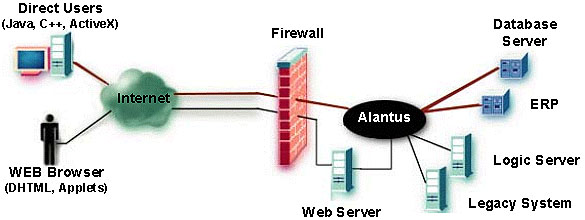
Figure x - Alantus in the Enterprise
With the above configuration, Alantus can deliver the following services
- Hosts and processes application/business logic written in Java, JavaScript or C/C++
- Execute logic written in 4GL/VB or any component model JavaBeans or COM
- Manages high volumes of transactions with back-end databases and deliver connection pooling
- Deliver scalable high performance, rapid deployment of transactional applications, our ERAD capability
- Has an open and extensible architecture that is fully compliant with all existing web standards, including HTTP, HTML, CGI, TCP/IP, JavaScript(ECMA) and Java
- Works with all popular web servers, browsers, and databases
The Overall Alantus Architechure
This section will focus on the applications that are built with the visual builder, and connected to the Applications server. The diagram below shows an overview of the Alantus architechure. The client in this case is a browser, and the browser is programmed through a combination of Java and JavaScript to deliver information that is transmitted via XML to the server. The server interprepts the XML, processes the commands, extracts the data, peforms some data access and transmits the result back to the client using XML.
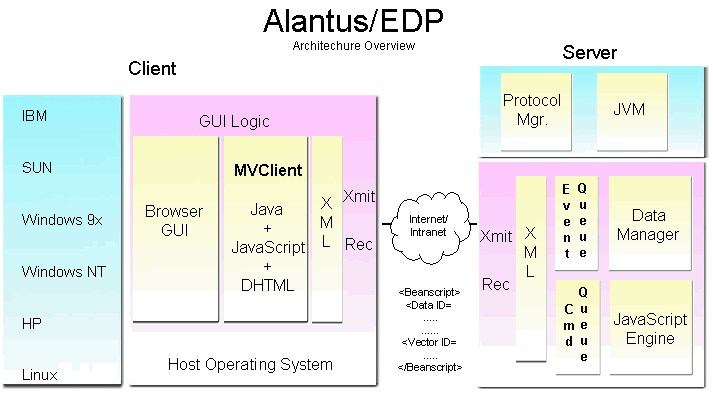
Figure 1 - Alantus/EDP Architechure Overview
What are the standards, and goals for this design?
- Portable Code
– Super Glue 1: JAVA - To achieve this goal we must be able to run our code on any server. That means that the glue that binds our main infrastructure must be Java. However Java is not capable of doing the whole job, and there are other languages (C, C++) that must be included, and other object models to consider. These other components must be callable from the main environment, thereby deliver our server independence.
- Portable Data
– Super Glue 2: XML – To deliver data to any machine, utilizing any object model, and any language, we require a data transportation format that is capable of representing data as objects. That capability is delivered by XML, originally developed by IBM, gives us the ability to talk as easily to Win32 Clients as to Browsers, essentially delivering our Client independence.
- Tools to delivery Productivity
– To deliver on the promise of this technology requires a set of tools to deliver the productivity that is implied in this model. The Alantus Visual Builder delivers this capability.
- Event Driven Applications
: A full event driven application development platform that delivers all of the required capabilities for enterprise development.
- Connection Pooling.
The major components of Alantus
- The Authoring tool will generate browser based or Win32 based Client Applications directly. The diagram above shows the client sitting on top of the operating system, sending and receiving XML from the Alantus Application Server.
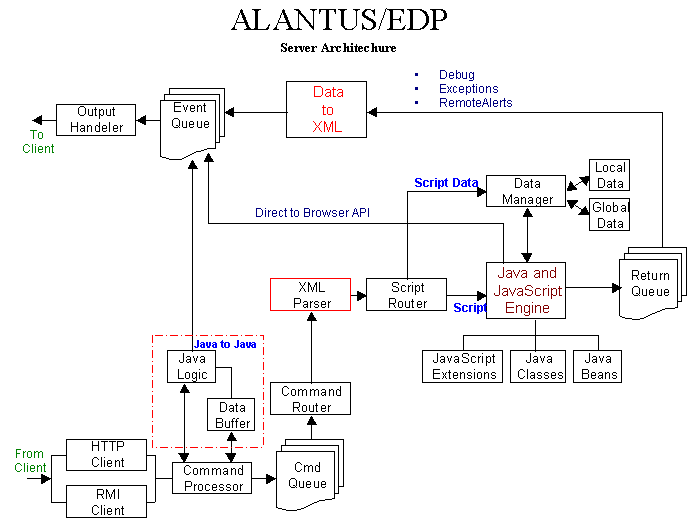
- The Server component of the system manages the events, commands, local and global data.
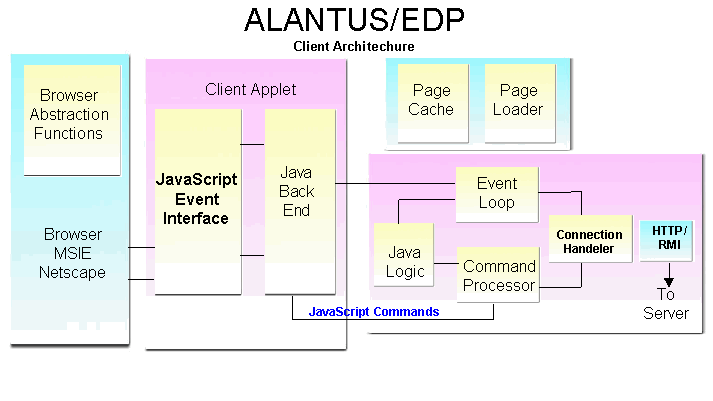
Detailed Client Diagram:
Detailed Server Diagram:
|